Sheet 03 / cloakroom
The count
The count before the vote
Leadership knows the result before the roll is called. That knowledge is the most valuable thing on the floor, and it is produced in a room with no transcript.
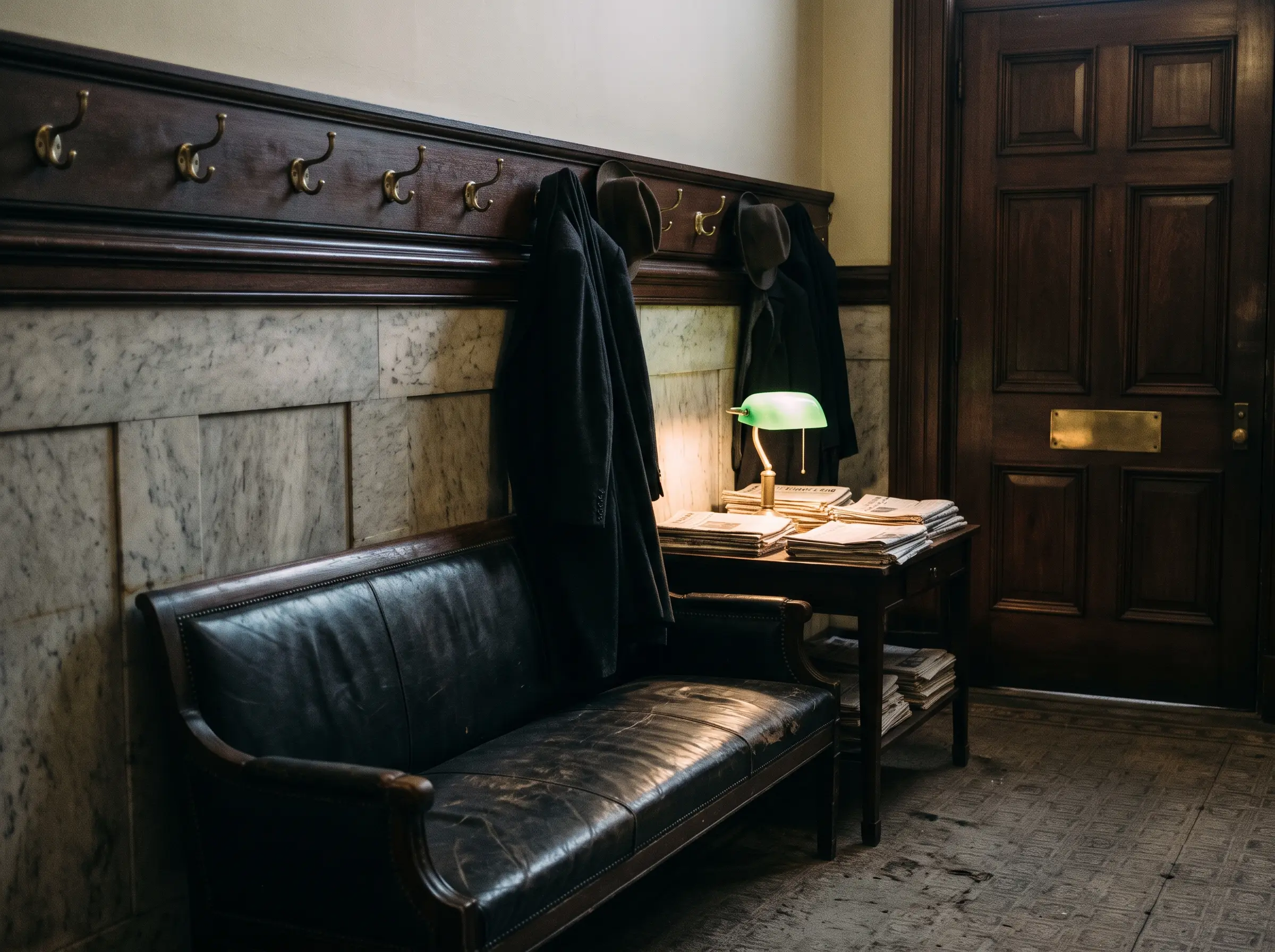
A cloakroom is not a metaphor. It is a small room off the floor with a coat rail, a bench, a telephone and a door that closes. Members leave the floor between votes, and leadership finds them there. The count is taken in conversation, sometimes in a single sentence, and it is revised until the leadership is confident enough to schedule a vote or pull one.
For a reader, the count explains the strangest part of floor reporting: why a measure with visible support sometimes never gets a roll call. The votes were there in public and not there in private, and the private number is the one that decides.
Four questions before a count is printed
- 01
Ask the member, not the staff
A count starts with the member. Staff estimates are useful for scheduling and useless for publication, because a staff estimate is not a commitment and cannot be corrected later.
- 02
Ask the same question twice
The first answer is usually about the measure. The second answer, days later, is about the politics of the measure. When the two answers differ, the desk records both and dates them.
- 03
Check the pairing list
Members who will be absent arrange pairs, and a pair removes two votes from the arithmetic at once. A count that ignores pairs is off by an even number, which is the kind of error that makes a paper look certain and wrong.
- 04
Print the number with the source
A published count names who gave it and when. If the number moves, the movement is the story, and the earlier number stays visible in the record rather than being quietly replaced.
The arithmetic a count is measured against
Threshold / votes / typical use| Threshold | Votes | Typical use |
|---|---|---|
| Simple majority | 51 of 100 sworn | Most floor business, including a motion to table |
| Three fifths | 60 of 100 sworn | Cloture on most measures and nominations |
| Two thirds | 67 of 100 sworn | Conviction on an article of impeachment |
Thresholds assume every seat is filled. A vacancy lowers the number required, which is one reason a count is always checked against the current roll.
What a count is not
A note on certainty
A count is not a forecast, and it is not a promise. Members change their minds for reasons that have nothing to do with the text, and leadership counts again on the day. The desk prints counts because they are facts about the present, and it avoids the sentence that turns them into predictions.
The same rule applies to the threshold table above. It describes arithmetic, not outcome. A measure can clear sixty votes and still fail on a procedural motion twenty minutes earlier, which is why the precedent file tracks motions separately from final passage.